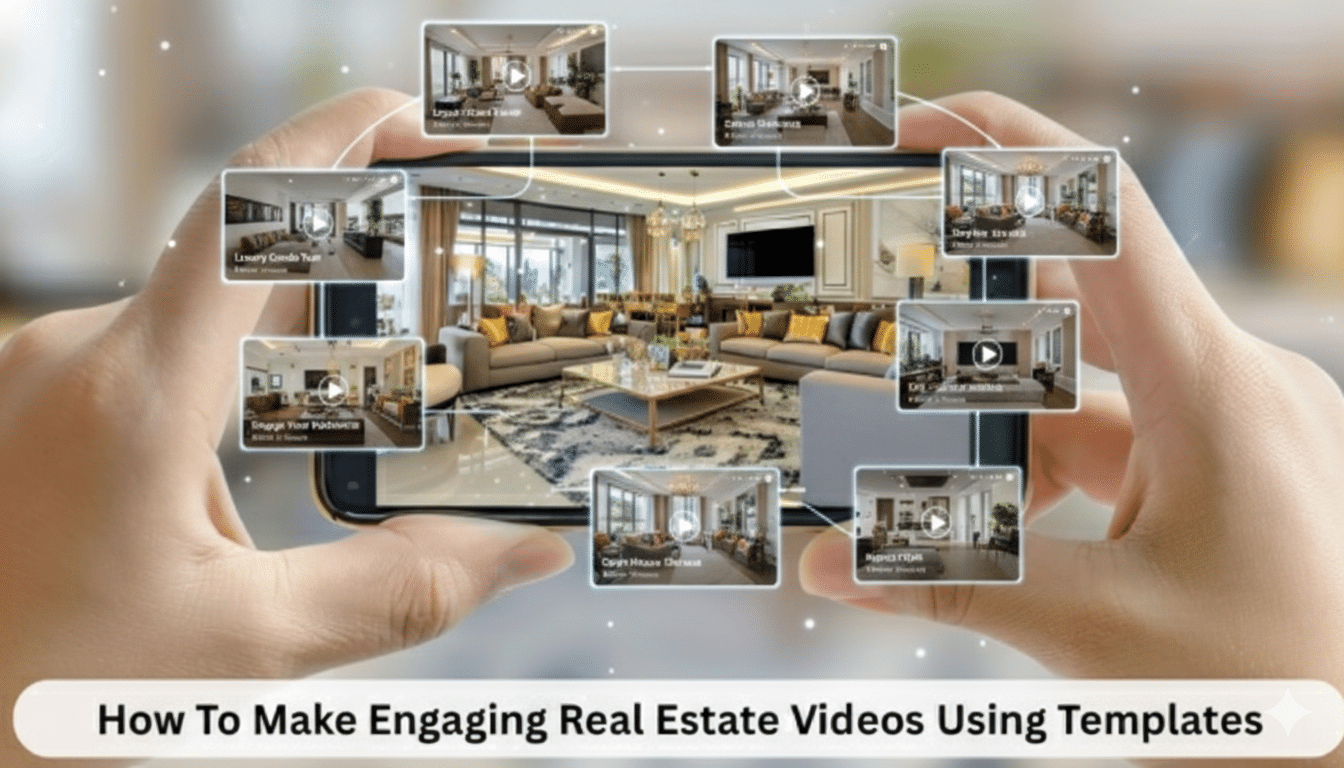
How To Make Engaging Real Estate Videos Using Templates

In today’s fast-paced digital real estate landscape, attention spans are shrinking, and competition is fierce. Video has become the number one tool for agents who want to stand out.
In fact, research from the National Association of Realtors indicates that video listings get four hundred percent more inquiries than those without video. Likewise, HubSpot shows that 91% of marketers believe video is their most effective lead generation tool. However, despite the evidence that it works, only a small percentage of agents regularly use video to market their business.
The biggest problem is time and complexity. Fortunately, templates have transformed this challenge into an opportunity. With video templates, real estate professionals can quickly and easily produce beautiful, brand-compliant videos in just minutes without needing to learn how to navigate editing software or hire a production crew.
Read on to discover how you can use real estate video templates to create appealing videos that attract viewers, showcase properties in their best light, and encourage conversions.
-
Select the Right Video Template for Your Goal
The initial and most crucial step in making a real estate video is choosing the proper template. Different types of videos have different goals, and selecting a template suitable for your intention will determine how effective your video will be.
A listing video calls for a format different from a neighborhood tour or social media teaser. The important thing is to know your goal—be it to entice potential buyers, introduce yourself as an agent, or highlight the lifestyle of an area.
In addition, software like Promo AI offers real estate industry-specific templates that match these needs. A simple, visually-focused template is perfect for property tours, whereas a more cinematic look is appropriate for neighborhood showcases.
Agent self-intro videos are best complemented by templates focusing on personal branding elements like colors, logos, and slogans. Lastly, when selecting a real estate video templates, consider orientation in format as well.
Horizontal templates are best for YouTube and websites, but vertical ones are ideal for TikTok, Instagram Reels, or Facebook Stories. Aligning your template to purpose and platform alike ensures your video looks deliberate and runs stronger across platforms.
-
Collect High-Quality Visuals
Even the most advanced video template cannot replace poor visuals. The finest images and clips give your video credibility and emotional content. So, begin with high-quality images of the property and short clips showcasing the house as its greatest asset.
Natural light is always ideal, especially for interior shots, while exteriors should be filmed during golden hour to achieve cozy, warm tones.
Drone footage is another valuable addition, especially when bringing out large lots, waterfront homes, or areas with a view. Aerial photography helps create a strong first impression and gives a feel for space that static photography cannot provide.
Lifestyle shots also work beautifully. Thus, including shots of surrounding parks, cafes, or street life sets the property in context and enables prospective purchasers to imagine the sense of living there.
If original footage is not feasible, most template suppliers provide stock libraries containing real estate-friendly materials such as cityscapes, interiors, or landscapes. Employing a combination of original and stock shots makes for an interesting and engaging final product.

-
Customize the Template to Match Your Brand
Online video templates for real estate are powerful, but true interaction comes from customization. This turns a generic template into a branded website that reflects your personal style and business.
Here are a few things that you should do first if you want to customize your template:
- Color Palette: Change template colors to match your brand’s hues. The same goes for your videos, website or social channels – consistency breeds familiarity and trust.
- Fonts: Pick sharp, readable fonts that help convey your brand personality — modern for city postings, elegant for luxury homes.
- Music: Select some background music that fits the mood of the property. Happy, energizing music is great for family homes, while mellow instrumental music is perfect for high-end listings.
- Logo and Contact Information: Add your company’s logo so that viewers remember who you are from the outset or at the end of the video, as well as contact information they can follow up with to learn more.
You want your video to look tailored, not off the rack. A few thoughtful changes can transform a generic template into an excellent marketing tool that feels distinctly your own.
-
Add a Persuasive Script or Voiceover
Even with compelling images, a good narrative turns a video into a story. Feeling and context come from a script or narration, which establishes context and captures viewers as they are guided through the property. A friendly but professional tone is most suitable for real estate videos since it creates a sense of rapport and credibility.
That said, the script must begin with a hook that catches the audience at once. Instead of mentioning the number of bedrooms, start with a dream: “Imagine returning home to stunning views of the sunset each evening.” This puts the prospective customers emotionally in the house.
On top of that, keep descriptions concise and benefit-oriented. Instead of listing “three bedrooms and two bathrooms,” mention “a multifunctional area perfect for families or an office.” Set the pace of the visuals to that of the voiceover, allowing each scene to have its own breathing space.
For anyone self-conscious about recording their own voice, most websites these days feature AI-generated voiceovers, which are natural-sounding and professional.
-
Optimize for Each Platform
Every social and digital platform handles video differently, and adjusting your format in every location ensures maximum performance. YouTube remains the ideal destination for longer-form real estate videos, while Instagram and TikTok dominate short-form engagement.
For YouTube, keep using the standard 16:9 landscape frame and focus on plain titles and keywords that put your video in front of viewers looking for it. Longer walkthroughs, neighborhood introductions, and agent introductions perform particularly well there.
On Instagram and TikTok, vertical 9:16 videos capture the most attention. So, start with the most aesthetic part of the property, like a wide-angle picture or luxury living room—to capture viewers’ attention in the initial three seconds. Facebook works best with square videos that fit seamlessly into the feed.
For web and email use, short clips are best. They are teasers that encourage individuals to click through to a full version or a property page. Knowing what works best on each platform means maximizing reach and engagement with the least amount of effort.
-
Use Call-to-Action (CTA) Strategically
Every successful real estate video marketing video will have a call-to-action at its conclusion. Having shown the property and raised interest, your CTA sends the viewer to the next step. Without it, even the most excellent video can lose prospects.
Lines like “Schedule a private showing today” or “Call us for more information” tell the audience what action to take. Alternatively, you can point them to your website or browse through similar ads. A visual CTA, like a text overlay or click-through button, in conjunction with a vocal one, reinforces the message effectively.
Placement is important too. A CTA works best when placed towards the end of the video, where audience members are already engaged, but it can also succeed by incorporating a small reminder in the middle for longer videos.
In fact, most of the templates have pre-made CTA spaces where you simply place your logo or contact information. Proper CTAS proactively engages passive viewers into active prospects.
-
Test, Analyze, and Improve
Producing videos is a continuous process. The best part about templates is that they provide scopes to adjust according to the performance analytics. Monitoring how your videos perform gives you some essential knowledge on audience preferences and allows you to optimize your future content.
Metrics like view count, engagement rate, and watch time show how engaging your video is, and click-through rate shows how compelling your CTA is. For instance, if your highlight reels are more engaging than full tours, you can focus on short, effective content.
Once you have reviewed the data, adjust your templates accordingly. You might change background music, text placement, or tempo based on what seems to work for audiences. The loop enables each next video to perform better than the last one, creating a cycle of ongoing improvement and higher returns.
-
Raise Storytelling with Emotion and Flow
Real estate videos aren’t about highlighting rooms—they’re about highlighting possibilities. Storytelling puts emotional depth behind your presentation and encourages buyers to envision themselves in the space. Templates give it a framework, but the story makes it meaningful.
Here’s how to build a storytelling real estate video:
- Opening Scene: Begin with a breathtaking visual hook—a sunrise across the property, a drone shot of the neighborhood, or an open doorway welcoming the viewer in. This sets the tone right away.
- Closing Scene: End on a note of hope, such as a sunset view from the balcony or a family in the backyard playing, with your logo and contact information.
The transition between these scenes should be fluid. A strong narrative flow not only maintains individuals’ interest but also aids in emotional investment, so they’re more likely to ask questions and share.
-
Keep Accessibility in Mind
Accessibility is usually underestimated, but it is essential to reach a wider audience. The majority of viewers watch videos silently, especially on mobiles, so captions become an important aspect. Templates have text overlay options in most cases, and you can add subtitles without affecting the design.
Color contrast is also essential. High-contrast text is readable, particularly for users with visual disabilities. Inexpensive visual indicators, like on-screen arrows or highlighting, can assist in directing attention throughout the video.
By making accessibility your top priority, not only do you meet inclusivity standards, but viewer experience and engagement are also improved. Accessible videos receive more views regarding watch time because they are easier to understand, whether or not sound is available, and in any environment.
-
Design a Content Calendar with Templates
Consistency is essential in video marketing. Instead of developing one video at a time, develop a content calendar that will keep your viewers engaged throughout the year. Templates make this easier by allowing you to maintain a consistent style while producing diversified content.
You can organize several types of videos each month—listing highlights, market news, customer testimonials, and community highlights. Having different types of videos builds a more vivid picture of your brand while keeping the audience’s interest.
Creating a video release schedule also keeps you in sight among social media algorithms. Posting frequently indicates activity and dependability, establishing trust with the platforms and viewers. Templates make this process efficient, enabling busy agents to handle consistent production.

-
Save Time with Batch Production
Video production will be time-consuming if you produce them one at a time. Batch production solves this problem by grouping similar jobs and executing them simultaneously. This works best when using templates, as it allows you to reuse the same template across multiple properties.
Here’s how you can batch like a pro;
- Plan and script multiple videos in bulk. You may have one overall general plan that can be applied to several properties with some adaptation.
- Shoot all your footage at one sitting and overlay a variety of templates onto each listing.
Batching saves production time by over half, leaving agents to work on client relations rather than continuous editing. It guarantees a steady stream of professional videos without the anxiety of starting over every week.
-
Keep Updating Your Template Library
Design trends evolve fast, and you need to keep your video templates fresh so your content appears new and not tired. A template that was state-of-the-art two years ago can now seem outdated. Refreshing your library reduces visual fatigue and shows clients you stay up to date with the latest industry developments.
Update your templates every 6 to 12 months, or as your brand matures. You may also seasonally switch up various template styles, such as bright, light templates in summer and denser, more mature tones in winter. Examining analytics will also help you determine which styles are better received by your audience.
That said, drawing inspiration from real estate video ideas can also help you experiment with new visual directions and storytelling formats, keeping your content appealing and relevant. Occasional updates keep viewers engaged and reinforce your brand’s adaptability and professionalism.

Converting Templates into Long-Lasting Marketing Tools
Video has become the heartbeat of new property marketing. Facts show that video listings generate much more interest, higher interaction, and faster sales. The conventional way of producing video traditionally deters agents, as they neither possess the time nor the technical skills.
In fact, customizable video templates for real estate eliminate the hurdle, allowing any real estate agent, whether experienced or a beginner, to produce film-style high-impact videos quickly and simply.
Templates not only simplify editing, but they also provide a reproducible recipe for success. With the right template, branding with imagery, a strong voiceover, and platform-specific optimization, you can create professional-grade videos that convert viewers into leads.


